



This post is also available in:
 Español (Spanish)
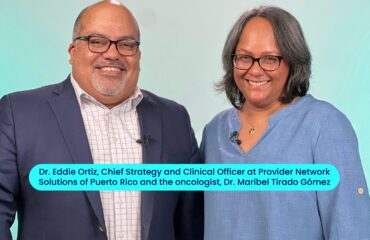
Interview conducted by Dr. Eddie Ortiz, Chief Strategy and Clinical Officer
You can see the full interview on our Youtube channel here: Mental Health in Times of Uncertainty and the Role of the Integrated Care Model
In a social and economic environment marked by uncertainty, financial stress, work overload, and the cumulative effects of collective traumatic events, mental health has become one of the main challenges for the healthcare system in Puerto Rico. The sustained increase in diagnoses of anxiety, depression, and other emotional disorders—particularly among adolescents, young adults, and the older adult population—requires an open clinical conversation based on evidence and free of stigma.
In this edition of Clinical Dialogue, Dr. Eddie Ortiz (EO), Chief Strategy and Clinical Officer of Provider Network Solutions, speaks with Dr. Raúl López (RL), psychiatrist and subspecialist in forensic psychiatry, Medical Director of FHC of Puerto Rico, about the current challenges in access to services, the responsible management of psychotropic medications, collaboration with primary care, and the value of family support within an integrated care model.
Through this conversation, we explore how the system can respond in a coordinated manner to the growing demand for mental health services, promoting early detection, timely referral, and a clinical approach that combines psychotherapy, responsible pharmacotherapy, and strong support networks.
We invite you to read and listen to this interview, where we delve into concrete strategies to strengthen quality, access, and hope in mental health care in Puerto Rico.
EO: We see the need for care, access, and appropriate medication management, collaboration with primary care, and we will talk about all of that. But first, why did you decide to pursue psychiatry? What has been your professional trajectory? 
RL: Originally, I wanted to become a clinical psychologist; I have always enjoyed human interaction. My father was a psychiatrist, and I felt encouraged, so I decided to pursue studies in medicine. In Guadalajara, Mexico, I obtained my degree as a physician and surgeon, and later I studied in the residency program at the Institute of Psychiatry in Puerto Rico at Centro Médico. Later, forensic psychiatry caught my attention, which is the interaction between psychiatry and the law. I was accepted at Harvard Massachusetts, where I completed training in the area of psychiatry in the courts, the medical-legal field. I then returned to Puerto Rico, where I began as Medical Director of correctional mental health. I spent nearly five years in the correctional health program, and administrative psychiatry then caught my attention. After working in several administrative psychiatry settings, I had several clinics and eventually remained working as an expert at the Department of Justice and later at FHC. I have developed within the area of managed care, with FHC being one of the companies most oriented toward the clinical management of the patient. Last year I was offered the position of Medical Director, and we are projecting toward the future to address the many challenges that mental health faces; that is the primary motivation that drives us to continue working in this field.
 EO: Let’s talk about the current context and what is happening in Puerto Rico, the social and economic situation. The social stressors that exist—how do you understand they are impacting diagnoses of anxiety, depression, and other mental health conditions?
RL: It is a worldwide problem. In our scenario in Puerto Rico, a series of changes have occurred at the social, personal, and occupational levels that have altered many of the traditional parameters that once guided daily life. As a consequence, there has been an increase in stress levels and family dysfunction at occupational and general population levels, producing states in which individuals who are vulnerable begin to develop symptoms of mental illness. Over the past 20 years, the incidence of depression in Puerto Rico has quadrupled. That is, there are four times more people diagnosed with and treated for major depression than there were in the 1980s and 1990s. In addition, increases have begun to appear in areas of organic psychiatric conditions such as bipolar disorder and schizophrenia, which go hand in hand with the stress people experience. There is a disruption and disintegration of families that leaves people without a focus or direction, and when this is combined with the economic stresses we have experienced over the past 20 years, we have the perfect storm for severe psychiatric disorders.
EO: That prevalence leads us to talk about the issue of access. How have you seen the impact on access, the availability of mental health specialists, and the entire multidisciplinary team needed to provide timely and appropriate services to patients in the face of that demand?
RL: That has been one of the challenges—perhaps the greatest one. In Puerto Rico there have never been enough psychiatrists to manage the entire population. However, due to the difficulties many healthcare professionals have faced in general and the increased demand in the United States resulting from the incidence of emotional disorders in the Latino population—which requires professionals who understand the culture and language—there has been aggressive recruitment, causing the number of psychiatrists here to decline significantly. This has created an access challenge, in ensuring that help reaches all those who need it. Today there are important initiatives regarding mental health management clinics, increased interaction among medical groups with consulting psychiatric professionals, and professionals who serve as support to treat these patients, identifying them and helping the primary professional manage a significant number of them, always with the support of the psychiatric treatment team.
EO: It also becomes imperative to talk about the role of the primary care physician. Patients have that first contact, and we are promoting more screenings, detection, and ensuring issues are not overlooked. How do you see the role of the primary care physician? 
RL: The role of the primary care physician is crucial in the management of mental health. Unfortunately, the vast majority of people with mental health problems do not first go to the psychiatrist. There are many beliefs and myths regarding people who have mental health problems. Although we have advanced greatly in recent years, depression is still often seen as a weakness of character, a lack of strength or determination to manage problems. Depression is a disease with a neurochemical basis, and these patients begin to seek alternative methods, entering a process of denial and turning to alcohol or opioids. In many cases, the only indications that a problem exists appear when the person visits the primary care physician for medical conditions. That is when the primary physical health professional—family medicine—can raise the alert that this person needs more specialized help. That is where cooperation among professionals comes in.
EO: The line we are developing between FHC and Provider, a structured collaboration to facilitate dialogue between primary care physicians and specialists, is the right path. You mentioned the therapeutic aspect, and in our practices we see the myths that exist regarding mental health medications.
 RL: Over the past 20 years, the treatment of mental health illnesses has shifted from psychotherapy to psychopharmacology. Since the 1960s, many psychotropics—medications that alter mood—began to appear. With the advent of antidepressants, we gained a new tool to treat depression. In addition, medications emerged that provide help for specific symptoms, mainly anxiety. That led us to anxiolytics, among which benzodiazepines stand out. Ativan, Xanax, and Klonopin have been relied upon as primary tools to address these problems. However, experience has taught us that in many cases these medications produce other problems different from those we are trying to treat. Many people with psychiatric problems do not accept them, and attempts to convince them that these medications will correct some of the negative sensations they experience are not successful, so they resort, for example, to alcohol, which produces other problems. One of the greatest challenges in mental health is educating all patients who use these medications about their benefits but also about their risks. Puerto Rico, unfortunately, is one of the jurisdictions in the United States where benzodiazepine anxiolytics are most frequently prescribed, particularly Klonopin. Three times more prescriptions for clonazepam (Klonopin) are written than in Alabama or Missouri, states that are economically similar to Puerto Rico. In many cases, the patient tries to resolve their situation with a medication. Usually, the combination of strategies—from anxiolytic medications and antidepressants to psychotherapy—is what truly enables people to grow and develop tools to deal with the problems and challenges they face daily.
EO: The star rating requirements and quality parameters of Advantage plans will measure the prevalence of patients who are on combinations of benzodiazepines such as opioids, and the role we have in promoting adjustments to those therapies and explaining them to the patient. We are being measured, and it is a quality standard. What is the importance of family and support networks when we are talking about the comprehensive management of patients?
RL: It is crucial. Most patients who have problems usually reflect them within their families. Almost always there are denial mechanisms; they do not want to accept that one of their members has problems. In some cases, the patient’s behavior is misunderstood as a personality problem—that they are uncooperative, aggressive, or unwilling to work. Obviously, the desperation and feelings of helplessness they experience toward the person with the mental health problem lead them into aggressive dynamics, sometimes even violent ones, in which they insult the patient, criticize them, say they are useless or that they will never achieve anything. This lack of support causes many patients not only to worsen but also to avoid seeking services. Working with mental illness is complex. In the 1970s, opioids were promoted by the very companies that produced them as the cure for all problems—pain, anxiety, sadness—and benzodiazepines, the famous Valium, were promoted as a way to function daily while minimizing their complications. Today we have realized that there are extremely high incidences of these two medications being prescribed at the same time, which in many cases is a fatal and lethal combination for the patient. This is one of the challenges we are working hardest on, and it is what Medicare seeks to address when it brings it into the star ratings area. At FHC we are working intensively on developing science-based protocols that help us manage these patients in the long term without resorting to medications that may ultimately create additional problems with addiction.
EO: I appreciate your time. This has been an extremely interesting conversation that helps professionals. There are organizations like yours and ours working to support physicians and patients, so they have hope and know that solutions exist. What encouraging and positive message would you like to share from that perspective?
RL: Mental health is the most important area of health. While I do not want to diminish the importance of the health of the heart, kidneys, or lungs, it is the central nervous system. It is the way we perceive the world and manage the challenges that make us effective, that allow us to live as a society and pursue the aspiration of happiness. Mental illness is not a weakness, it is not a punishment; it is simply a disease like any other physical illness that has treatment, and most of the time that treatment successfully corrects the problem. Do not be afraid to ask your primary care physician about your mental health. They know how to manage it, and we have different alternatives to ensure that every person who requires help in the area of their personal or family mental health has all the resources they need.
You can see the full interview on our Youtube channel here: Mental Health in Times of Uncertainty and the Role of the Integrated Care Model
This post is also available in:
Español (Spanish)